Shabbat Mornings
Every word said aloud. No mumbling.
You will always know what page we are on.
Schedule of service times
We generally meet biweekly as above, subject to change.
This Shabbat · Saturday, 19 September 2026 · 8 Tishri 5787
Shabbat Parashat Ha'azinu
All times approximate
SHABBAT SHUVAH — SATURDAY MORNING
Please feel free to come and go as you wish.
We meet in a private home. Please be in touch before your first visit.
What makes us different?
Traditional, but egalitarian.
Everyone welcome, all included.
Halakhic (Ritual) Times — Poughkeepsie, NY 41.70 N 73.92 W
Ha'azinu, Deuteronomy 32:1–52.
The song of Moses. He calls heaven and earth to listen, and asks that his words fall as rain and as dew on new grass. The Eternal is the Rock whose ways are just, who found Israel in a howling waste and bore them up as an eagle carries its young. Then Jeshurun grew fat and forgot the Rock. Hard years follow, and with them the word that the Holy One deals death and gives life, wounds and heals, and will yet vindicate this people. Moses tells Israel to take these words to heart and teach them to their children, for they are their very life. He is then told to climb Nebo, look at the land, and die there.
Haftarah: Hosea 14:2–10; Micah 7:18–20, the Sephardic reading (Ashkenazim read Hosea 14:2–10; Joel 2:15–27).
The Sephardic haftarah joins Hosea and Micah. Hosea calls: return, O Israel, take words with you and speak them, ask for healing and offer the fruit of your lips. Horses and the work of our own hands will no longer be called god. The answer comes as weather e2 80 94 the Eternal will be to Israel like dew, and Israel will blossom like the lily and strike root like a Lebanon tree. Micah closes with a question: who is a God like You, forgiving iniquity. Sins are thrown into the depths of the sea, and the promise made to Abraham and Jacob stands.
KKZZ will NOT hold services on Kippur, we will be in synagogue at KK Shearith Israel, The Spanish & Portuguese Synagogue, NYC
Kippur, Leviticus 16:1–34; maftir Numbers 29:7–11.
Haftarah: Isaiah 57:14–58:14. Ashkenazim and Sephardim read the same passage.
Kippur, Minhah reading, Leviticus 18:1–30.
Haftarah: Jonah 1:1–4:11; Micah 7:18–20. Ashkenazim and Sephardim read the same passage.
Services at KKZZ will resume for Shemini Ḥag Azeret and Simhah Torah, 3 and 4 October. Bulletin will arrive in your inbox next week.
Saturday, 19 September — Shabbat Shuba.
Sunday, 20 September — Erev Kippur. Candle lighting 6:38 pm (18 minutes to sunset); sunset 6:56 pm.
Monday, 21 September — Kippur.
Friday, 25 September — Erev Sukkot. Candle lighting 6:30 pm (18 minutes to sunset); sunset 6:48 pm.
Saturday, 26 September — Sukkot, first day.
Kiddush follows the service. Meals are dairy and vegetarian.
We meet in a private home; our address is shared by message. If prayer is not your thing, you are welcome to join only for the Kiddush and the company.
To RSVP and to register food issues and avoidances, kindly contact the Congregation's secretary at kehillatzikhronzvi@gmail.com by Thursday night at 10:00 pm
KKZZ is free to join, there is no membership fee, and we never solicit contributions from members, students, parents or alumni. You may, if you wish, sponsor a meal or contribute to the work of the Congregation. Kehillah Kedoshah Zikhron Zvi is a tax-exempt charitable organization under Section 501(c)(3) of the Internal Revenue Code; offerings are tax-deductible to the extent permitted by law.
The Rambam rules that Kippur is the time of teshuvah for everyone, for each of us alone and for the whole community, and that the confession of the day begins on its eve, before the last meal, so that no one enters the fast with it unsaid.1 It is said again at Ngarbit, and again in the morning, at Musaf, at Min e0 a5a and at Ne'ila; each of us confesses after the Amida, and the e1 a5azan within it. The Talmud knows a declaration made at the start of the year that voids the vows a person may come to take in it, and records that a sage was told to keep it out of the public lecture, lest vows be treated lightly.2 Kal Nidre grew out of that guarded teaching. The Shul e1 a5an Arukh has the e1 a5azan begin it while the day is still light, drawn out with melodies until nightfall, said three times, each time in a stronger voice, and then Shehe e1 a5eyanu without a cup of wine.3
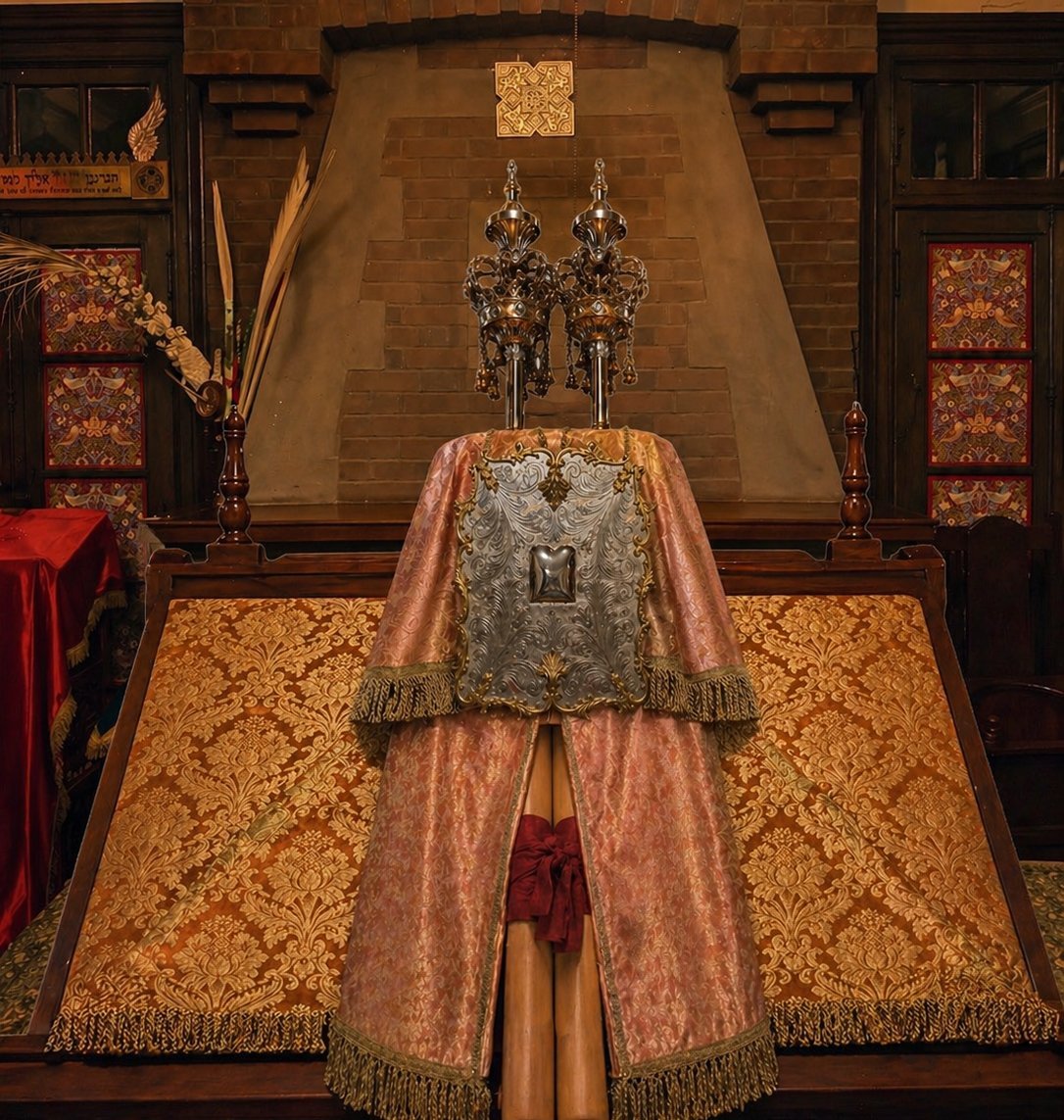
The oldest wording we have is Rav Saadia Gaon's, brought in the Tur in the name of the Rosh: the e1 a5azan stands on the night of the fast and speaks of the vows and oaths taken from last Kippur until this one, closing with the verse that the whole congregation of Israel is forgiven, and the stranger dwelling among them. Rabbenu Tam turned the wording toward the year ahead. The practice was contested from the start. Rav Hai Gaon and Rav Nissim Gaon objected to annulling vows this way, and the two academies of Babylonia did not say it at all.4 Among us, those who stand beside the e1 a5azan holding the scrolls are drawn from the whole congregation, women and men.
1. Mishneh Torah, Repentance 2:7 2. Nedarim 23b 3. Shul e1 a5an Arukh, Ora e1 a5 e1 a4ayim 619:1 4. Keter Shem Tob, vol. 6, pp. 309 e2 80 93310
Moses asks that his words come down as the rain and distill as the dew. Rashi hears him calling heaven and earth to see that the Torah given to Israel is life to the world, as rain is life to the world.1 The Talmud reads the verse as two weathers, rain that drums and dew that settles, and says that for one who learns worthily the teaching comes as dew.2 On the eve of Kippur the gentler image is the one we want. Hosea promises that the Eternal will be to Israel like dew, and Israel will blossom like the lily.3 The turning asked of us is meant to soften the heart.